Life Sciencescompanies are under increasing pressure to use advanced manufacturing processesand sciences to ensure that manufactured drugs meet compliance requirements ofpatient safety, product quality and data integrity. Additionally, social andpolitical pressures require them to produce drugs that are affordable to abroader section of patients across the economic ladder. To achieve thesepatient-focused outcomes, they are not only designing quality into theiroperations and systems, but they are also validating them to ensure that thesesystems and processes function as designed. This article addresses whyvalidation projects fail and result in signification cost increases.
生命科學(xué)公司面臨越來越大的壓力,需要使用先進(jìn)的制造工藝和科學(xué)��,以確保制造的藥物符合患者安全�����、產(chǎn)品質(zhì)量和數(shù)據(jù)完整性的合規(guī)性要求�����。此外��,社會(huì)和政治壓力要求他們生產(chǎn)出在經(jīng)濟(jì)階梯中更廣泛的患者負(fù)擔(dān)得起的藥物�����。為了實(shí)現(xiàn)這些以患者為中心的結(jié)果����,他們不僅在操作和系統(tǒng)中設(shè)計(jì)質(zhì)量,還需要進(jìn)行驗(yàn)證�����,以確保這些系統(tǒng)和工藝按照設(shè)計(jì)運(yùn)行����。本文討論驗(yàn)證項(xiàng)目失敗并導(dǎo)致注冊(cè)成本增加的原因。
What is Validation
Validation isthe documented evidence of testing to verify that computerized systems andprocesses consistently perform as designed and is “fit for use”. Sincevalidated systems must be maintained in a validated state, any changes tovalidated systems are required to be re-validated. Thus validation is arecurring cost and if not performed in an optimal manner, could significantlyincrease the Cost of Goods (COG).
驗(yàn)證是測(cè)試的書面證據(jù)�����,以證明計(jì)算機(jī)化系統(tǒng)和工藝始終如一地按照設(shè)計(jì)運(yùn)行并"適合使用"�����。由于已驗(yàn)證的系統(tǒng)必須保持驗(yàn)證狀態(tài)�����,因此需要對(duì)已驗(yàn)證系統(tǒng)的任何變更進(jìn)行再驗(yàn)證��。因此,驗(yàn)證是一種經(jīng)常性成本����,如果不以最佳方式執(zhí)行,可能會(huì)明顯增加成本(COG)����。
Many validationprojects invariably overrun budgets and fail to meet schedules. This conundrumoften results in management eyeing validation costs suspiciously. Under costcontainment pressures from management, there is a tendency to cut corners whichresults in an increased compliance risks. This article provides factors thatcause validation projects to fail and how to proactively address those factorsto pre-emp failures. Some of the common observations and citations onvalidation by regulatory auditors include:
許多驗(yàn)證項(xiàng)目總是超支預(yù)算,并且不能按照預(yù)定時(shí)間完成��。這個(gè)難題通常會(huì)導(dǎo)致管理層對(duì)驗(yàn)證成本產(chǎn)生懷疑��。在管理層的成本控制壓力下����,存在削減開支的趨勢(shì),從而導(dǎo)致合規(guī)性風(fēng)險(xiǎn)增加����。本文提供了導(dǎo)致驗(yàn)證項(xiàng)目失敗的因素�����,以及如何主動(dòng)解決這些因素以避免失敗��。監(jiān)管檢查員對(duì)驗(yàn)證的常見發(fā)現(xiàn)項(xiàng)和缺陷項(xiàng)包括:
Failure to validate a system used for regulatory purpose
未能驗(yàn)證受監(jiān)管系統(tǒng)
Absence of written procedures for validation
缺乏書面的驗(yàn)證程序
Absent or inadequate objective evidence of validation
客觀驗(yàn)證證據(jù)不足或不充分
Validation SOPs are not followed
未遵循驗(yàn)證SOP
Validation is not risk based
驗(yàn)證未能基于風(fēng)險(xiǎn)
Factors contributing tovalidation failure
導(dǎo)致驗(yàn)證失敗的因素
Validationproject failure can be attributed to the following factors:
驗(yàn)證項(xiàng)目失敗可歸因于以下因素:
Unclear project objectives and methodologies
項(xiàng)目目標(biāo)和方法不明確
Failure to engage all stakeholders consistently
未能一貫地讓所有利益相關(guān)方參與其中
Absence of proactive project risk management
缺乏主動(dòng)的項(xiàng)目風(fēng)險(xiǎn)管理
Untrained or poorly trained validation team members
驗(yàn)證團(tuán)隊(duì)成員未經(jīng)培訓(xùn)或培訓(xùn)不足
Lack of project status in real time
未能實(shí)時(shí)更新項(xiàng)目狀態(tài)
Gaps in communication
缺乏溝通
Unclear project objectives and methodologies
項(xiàng)目目標(biāo)和方法不明確
It is important for the project sponsor to clearly define the validationproject objectives. The Project manager should develop a clear and conciseProject Execution Plan (PEP) at the start of the project and train everyproject team member on the PEP. A clear, unambiguous, validatable and concise SystemRequirements and User Requirements developed at project start by theappropriate stakeholders is also the key to a successful project. A robustValidation Project Plan (VPP) is the responsibility of the Validation lead andit should outline the scope of validation activities, the testing approach, thetesting team and their responsibilities and the acceptance criteria. Failure inplanning in areas stated above is the foundation for the failure of aValidation project.
項(xiàng)目負(fù)責(zé)人必須明確定義驗(yàn)證項(xiàng)目的目標(biāo)。項(xiàng)目經(jīng)理應(yīng)在項(xiàng)目開始時(shí)制定清晰��、簡(jiǎn)潔的項(xiàng)目執(zhí)行計(jì)劃(PEP)��,并對(duì)PEP 培訓(xùn)每個(gè)項(xiàng)目團(tuán)隊(duì)成員�����。由適當(dāng)?shù)睦嫦嚓P(guān)方在項(xiàng)目開始時(shí)制定的清晰����、明確、有效�����、簡(jiǎn)潔的系統(tǒng)需求和用戶需求也是項(xiàng)目成功的關(guān)鍵����。可靠的驗(yàn)證項(xiàng)目計(jì)劃(VPP)是驗(yàn)證主管的責(zé)任�����,它應(yīng)概述驗(yàn)證活動(dòng)的范圍����、測(cè)試方法��、測(cè)試團(tuán)隊(duì)及其職責(zé)以及接受標(biāo)準(zhǔn)��。未能規(guī)劃上述事項(xiàng)是驗(yàn)證項(xiàng)目失敗的基礎(chǔ)��。
Failure toengage all stakeholders consistently
未能一貫地讓所有利益相關(guān)方參與其中
Successfulprojects result from the continued engagement of a set of stakeholdersconsisting of the project sponsor. business unit executives, quality personnel,members from the IT, QC laboratory and engineering groups etc. It ensurescontinuous adjustment and alignment to meet challenges arising from changingsituations such as scope changes, human errors etc. A clear set of definedgoals and objectives, reviewed throughout the term of the project is arecommended best practice.
成功的項(xiàng)目來自一支利益相關(guān)方團(tuán)隊(duì)的持續(xù)參與����。業(yè)務(wù)部門領(lǐng)導(dǎo)����、質(zhì)量人員、IT�����、QC 實(shí)驗(yàn)室和工程部門等����。它確保持續(xù)調(diào)整和合作����,以應(yīng)對(duì)因范圍變化����、人為錯(cuò)誤等不斷變化的情況而產(chǎn)生的挑戰(zhàn)�����。一套明確的既定目的和目標(biāo)�����,并在整個(gè)項(xiàng)目期間進(jìn)行審查����,是推薦的最佳做法。
Absence ofproactive project risk management
缺乏前瞻性的項(xiàng)目風(fēng)險(xiǎn)管理
This is the mostneglected aspect of project management. During project setup and teamformation, the teams fail to proactively identify, analyze and mitigate projectrisk to scope, schedule and budget. Doing so up front will prevent projectrisks to be addressed reactively which provides management the optics of theproject team as having lost control of the project. It is prudent to developand publish a Project Risk Management Plan and educate the entire project teamon the risks.
這是項(xiàng)目管理中最受忽視的方面��。在項(xiàng)目啟動(dòng)和團(tuán)隊(duì)組建過程中����,團(tuán)隊(duì)無(wú)法前瞻性地識(shí)別、分析和降低范圍��、計(jì)劃和預(yù)算的項(xiàng)目風(fēng)險(xiǎn)�����。預(yù)先這樣做可以防止項(xiàng)目風(fēng)險(xiǎn)的被動(dòng)處理,從而為管理層提供了項(xiàng)目團(tuán)隊(duì)對(duì)項(xiàng)目失控的視線��。制定和發(fā)布項(xiàng)目風(fēng)險(xiǎn)管理計(jì)劃并對(duì)整個(gè)項(xiàng)目團(tuán)隊(duì)進(jìn)行風(fēng)險(xiǎn)培訓(xùn)是明智的����。
Untrained orpoorly trained validation team members
驗(yàn)證團(tuán)隊(duì)成員未經(jīng)培訓(xùn)或培訓(xùn)不足
Validation is abusiness centric activity where in a business process consisting of a sequenceof activities are used to derive an outcome e.g. a validated system. However,outcomes can be successfully achieved if we individually focus our attention tothe associated elements – such as people, team and leadership. Training peopleon the principles and methods of validation along with the associatedregulations that validation is required to satisfy is critical. Explaining tothem why they are required to do what they are required to do along with theimpact to compliance if they fail to do so is also very critical. Training themon the Validation SOPs to include Change Management etc. is also necessary, soas to avoid rework due to error.
驗(yàn)證是一個(gè)以業(yè)務(wù)為中心的活動(dòng),其中在由一系列活動(dòng)組成的業(yè)務(wù)流程中��,用于得出結(jié)果����,例如:經(jīng)過驗(yàn)證的系統(tǒng)。但是�����,如果我們將注意力集中在相關(guān)要素(如人員��、團(tuán)隊(duì)和領(lǐng)導(dǎo)力)上�����,就能成功實(shí)現(xiàn)成果�����。對(duì)人員進(jìn)行驗(yàn)證原則和方法的�����,以及驗(yàn)證要求的相關(guān)法規(guī)的培訓(xùn)至關(guān)重要����。向他們解釋,為什么他們需要執(zhí)行所要求的事情��,以及如果未能這樣做對(duì)合規(guī)性的影響��,也非常重要����。還必須培訓(xùn)驗(yàn)證 SOP ,包括變更管理等����,以避免因錯(cuò)誤而從頭來過。
Provision shouldalso made to establish a project onboarding training program for new projectmembers joining the team during the course of the project. Many of these risksdue to people factors may be eliminated through use of paperless validation oras the industry refers to as automation of the validation process.
還應(yīng)作出規(guī)定����,為項(xiàng)目過程中新成員加入建立上崗培訓(xùn)計(jì)劃。多數(shù)人為因素風(fēng)險(xiǎn)可通過無(wú)紙化驗(yàn)證或所謂的自動(dòng)化驗(yàn)證過程消除。
Lack of projectstatus in real time
缺乏實(shí)時(shí)項(xiàng)目狀態(tài)
Executive management often complain that they do not have real time visibilityinto the current status of all projects. Unfortunately, they are made aware ofcritical issues when the impact on costs, timelines and scope are significantor irreversible. Since they are the final defense againstproject failure, it is critical that they be presented this visibility in realtime in a concise and clear manner such as in a dashboard format.
執(zhí)行管理層經(jīng)常抱怨說��,他們沒有實(shí)時(shí)了解所有項(xiàng)目的當(dāng)前狀態(tài)��。不幸的是�����,當(dāng)對(duì)成本�����、計(jì)劃和范圍造成重大或不可逆轉(zhuǎn)的影響時(shí)����,他們才意識(shí)到關(guān)鍵問題。因此����,必須以簡(jiǎn)潔明了的方式(如看板)實(shí)時(shí)顯示這些變化。
Gaps incommunication
缺乏溝通
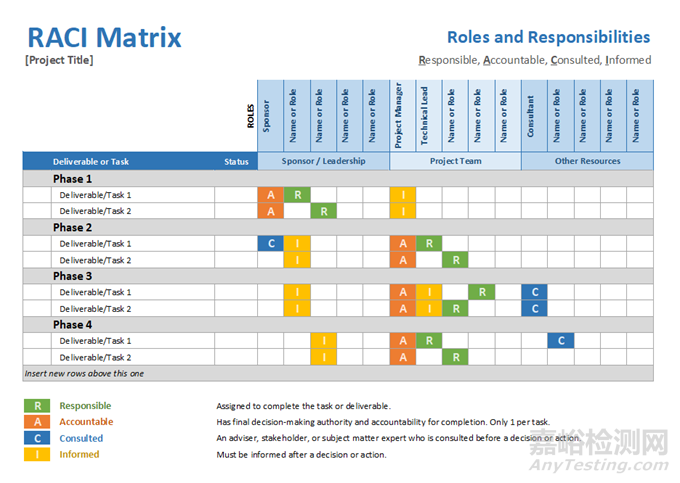
Real timevisibility into a project status is also realized through regular standingmeetings of project team members, release of meeting minutes in a timely mannerso that issues identified are satisfactorily addressed and reported out duringthe next meeting, ensuring regular attendance of all stakeholder at thesemeetings, publishing a RACI (Responsibility, Accountability, Consult, Inform)chart, identifying critical path in real time and assigning resources to movethose activities out from the critical path etc.
項(xiàng)目狀態(tài)實(shí)時(shí)可見還可通過項(xiàng)目團(tuán)隊(duì)成員定期例會(huì)�����、及時(shí)發(fā)布會(huì)議紀(jì)要�����、在下次會(huì)議上令人滿意地處理和報(bào)告已發(fā)現(xiàn)的問題、確保所有利益相關(guān)方定期出席這些會(huì)議�����、發(fā)布 RACI(誰(shuí)負(fù)責(zé)(R = Responsible),誰(shuí)批準(zhǔn)(A = Accountable)����、咨詢誰(shuí)(C = Consulted),通知誰(shuí) (I =Informed)))圖表��、實(shí)時(shí)確定關(guān)鍵路徑以及分配資源以將這些活動(dòng)從關(guān)鍵路徑中移出等��。
In conclusion
結(jié)論
Business expediencyrequires thatvalidation of systems and processes is a priority of executive management andthat the validation objectives are realized efficiently through appropriateplanning, risk management, preventing scope creep through planning andrequirements definition, an agreed to acceptance criteria with the projectstakeholders and ensuring that executive management including the projectsponsor has continuous visibility into project status in real time.
業(yè)務(wù)策略要求系統(tǒng)和工藝的驗(yàn)證是執(zhí)行管理的優(yōu)先事項(xiàng)��,驗(yàn)證目標(biāo)必須通過適當(dāng)?shù)挠?jì)劃��、風(fēng)險(xiǎn)管理�����、通過規(guī)劃和需求定義防止范圍蠕變��、與項(xiàng)目利益相關(guān)者商定接受標(biāo)準(zhǔn)以及確保包括項(xiàng)目申辦人在內(nèi)的執(zhí)行管理層實(shí)時(shí)持續(xù)了解項(xiàng)目狀態(tài)����,從而有效地實(shí)現(xiàn)驗(yàn)證目標(biāo)��。
摘自PDA電子期刊

 京公網(wǎng)安備11010802046783號(hào)